

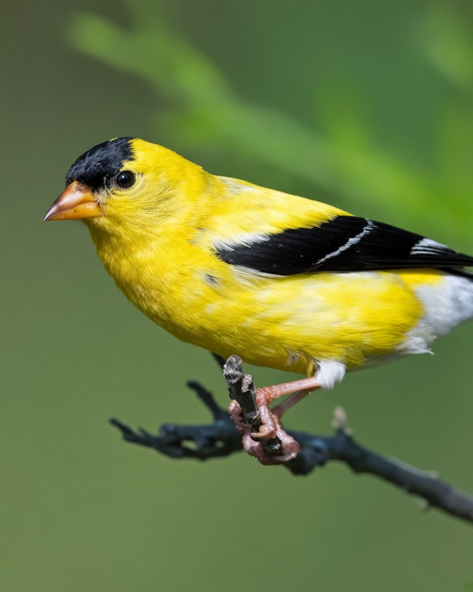
An American goldfinch soars gracefully through the warm spring air, its vibrant yellow feathers catching and reflecting the bright sunlight in a dazzling display. Suddenly the bird opens its small mouth and chirps out a distinctive call that sounds remarkably like “po-ta-to-chip.” This lively flier isn’t searching for any kind of salty snack, of course. Instead, it is deliberately using this unique vocalization to communicate with others in its flock, sharing information or simply staying connected as they move together. The bird continues onward through the sky, repeating its cheerful and almost delicious-sounding call along the way.
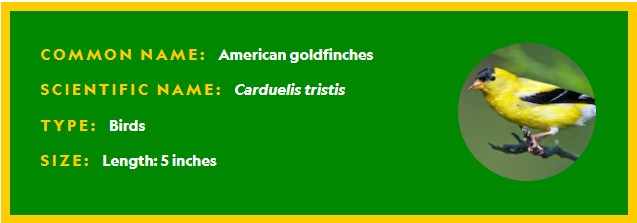
WHERE THEY LIVE The American goldfinch makes its home at the edges of forests and open plains across much of North America, favoring areas richly filled with brush, weeds, and thistle plants that provide both food and cover. It adapts well to human spaces too and can frequently be spotted in suburban backyards, gardens, and public parks. Known by a couple of other common names—the willow goldfinch and the eastern goldfinch—this cheerful species holds special status as the official state bird of Washington, Iowa, and New Jersey.
WHAT THEY LOOK LIKE These compact birds are roughly the length of a stick of butter and possess distinctive cone-shaped beaks perfectly suited to their diet. Their wings display a striking pattern of black and white, while some individuals, particularly breeding males, sport a bold black patch on the top of their heads. During the colder winter months, both males and females grow duller brownish feathers that help them blend into the landscape. Once warmer weather arrives, the males molt into brilliant bright yellow plumage that makes them especially easy to recognize.
WHAT THEY EAT American goldfinches are true granivores, meaning they rely primarily on seeds as the foundation of their diet. Among their favorite choices are the nutritious seeds of sunflowers, thistles, and elm trees, which they skillfully extract and consume throughout the year.
WHAT EATS THEM Despite their agility, American goldfinches face a range of predators. Blue jays, American kestrels, weasels, eastern garter snakes, and even domestic cats all hunt and prey upon these small, colorful birds.
HOW THEY BEHAVE The goldfinch is a diurnal species, remaining most active during daylight hours when it forages and socializes. It demonstrates excellent flying skills, moving through the air in a characteristic dipping and rising wavelike pattern as it travels. When not airborne or perched among plants, the bird hops energetically along the ground in search of fallen seeds. These sociable animals produce at least six different vocalizations, the most famous of which remains their familiar “po-ta-to-chip” flight call.
